
Sorted, Separated, and Underfunded
Dr. Louis Esposito, Ed.D. May 4th, 2026
On April 27th, the Nashua School superintendent Dr Mario Andrade, proposed moving students with disabilities into consolidated, segregated classrooms located in one school. He did it because the district is out of money. They are out of money because the state funds roughly 10 cents of every dollar spent on special education. The state funds 10 cents because the federal government funds less than 12 cents of the 40 it promised. And Congress promised 40 cents in 1975 and has been breaking that promise every single year since.
What happened in Nashua is not a local decision. It is the end of a very long chain of failures and Nashua’s disabled students are the ones paying for it.
During this meeting, Dr Andrade presented a plan to reconfigure various program throughout the Nashua School District. The EPICS program (Evidence-based Positive Intensive Compassionate Structured) is designed to support students with “intensive” needs. Per the report, this program serves students with the highest level of need and require intensive support. Additionally, the program is described as one for students that have minimal inclusion in their IEP’s and are primarily served in self-contained classrooms. According to the plan, this is a program for students who require consistent support that can’t be typically provided in the general education setting. The program will gradualy shift from 4 classrooms at Broad Street (K-3rd grade) and 3 classrooms at Sunset Heights (4th and 5th grade) to Broad Street for all classes (K-5th) in the 28/29 school year. The classrooms will be capped at 10 students per room where there will be 1 teacher, 3 behavior technicians and 4 paraeducators. Overseeing these programs will be 2 BCBA’s and 1 Program coordinator.
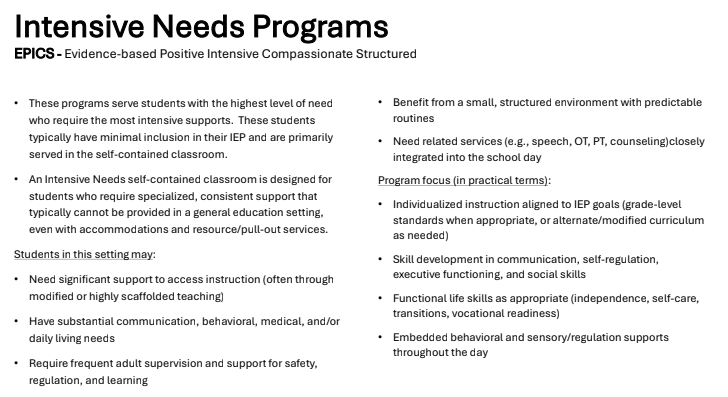
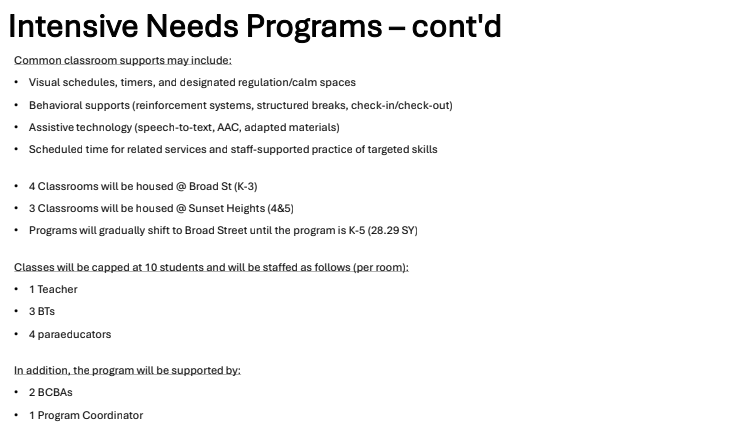
This is a snapshot of the current picture. What you don’t see often is the context that surrounds why so many people are upset .
The disability community is angry, anxious, and agitated. For far too long, students and adults have been viewed as charity, viewed as inspiration porn, and have been segregated from society and in schools. Robert Kennedy Jr., the Secretary of Health and Human Services, has stoked fear in in home and community based support systems, has added to the decades worth of misinformation about cause of autism, and has even claimed that autistic individuals will never pay taxes, write poems, or go on a date.
Out state legislators are making equally ridiculous claims. In a hearing for the bill HB 1316, which was attempting to restrict the collection and disclosure of autism-related data by state agencies, a bill intended to respond to the growing fear caused by language from the federal government, a number of advocates when to Granite Place in Concord to testify in favor of this bill. ABLE NH Policy Director, Krysten Evans, was asked by Representative Matthew Drew “If Autism can be cured, would you support that”. Following her response, Evans asked Representative Drew the same questions. His response, “I absolutely would”. A sitting state representative, in a public hearing room, said plainly that he believes autism should be eliminated. Not supported. Not accommodated. Eliminated. That is not a fringe view from the internet. That is a view held by someone with a vote on legislation that affects the lives of every disabled person in New Hampshire. And it did not generate outrage. It did not make headlines. It was just another moment in a hearing that most people never watched.
The Nashua school district has been faced with a significant budgetary issue. This is very clear. Superintendent Andrade was honest about the financial pressure driving this plan. Special education contracted services costs have grown from roughly $33,000 in actual FY2022 expenditures to a projected $4 million in FY2026. Out-of-district tuition costs have climbed from $5.3 million to over $7.2 million in the same period. The district established a Special Education Trust Fund, intended to be a multi-year resource, and then had to drain the entire $3.2 million in less than six months to cover current-year invoices.
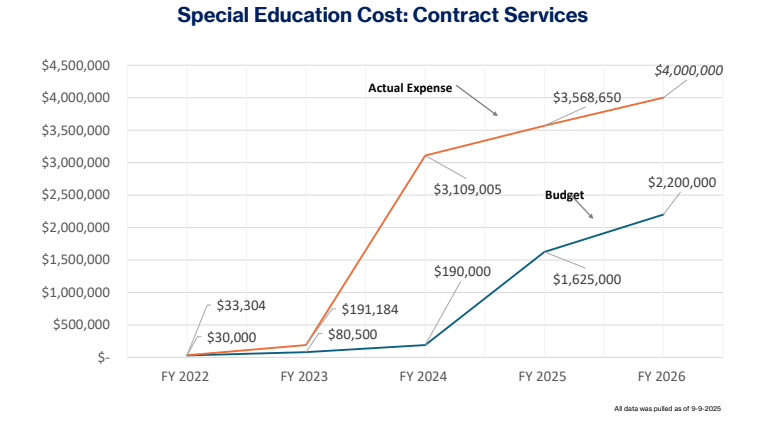
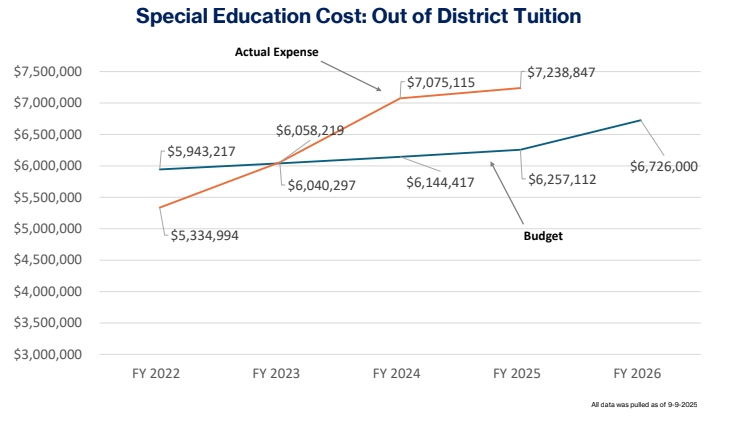
These are not Nashua-specific issues. They are the result of a funding structure that is broken.
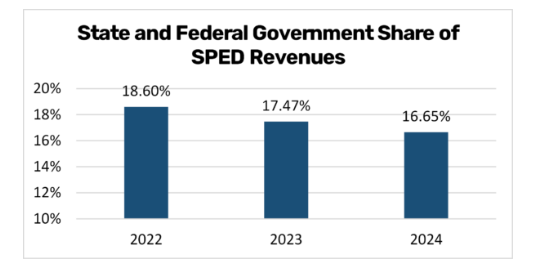
Here is what that structure looks like in plain numbers. Congress passed the Individuals with Disabilities Education Act (IDEA) in 1975 and promised to cover 40% of the cost of educating students with disabilities. Fifty years later, the federal government covers roughly 13%. Not 40. Thirteen. The promise was made, the money was never sent, and school districts have been filling the gap with property taxes and trust funds and creative accounting ever since.
New Hampshire makes it worse. The state contributes on average about $3,285 per student with an IEP, covering just over 10% of actual additional costs. Local property taxpayers pick up the remaining 83%. In Nashua and other school districts across the state, that means the city’s residents are paying for a federal civil rights mandate that the federal government chose not to fund and a state obligation that the NH legislature chose to underfund. Year after year. Budget cycle after budget cycle.
But when decisions about disabled students are driven by “economies of scale”, we have an obligation to pause and ask what the short and long-term consequences will be. Efficiency is not a neutral word when the people being made efficient are children.
So there is a significant issue. Research over and over demonstrates that inclusive classrooms are beneficial for students across the board. A separate comparison study found that students educated in inclusive settings made significantly greater progress in communication, literacy, and math, while a majority of students in separate settings made little to no progress in those same areas (Gee et al., 2020). These are not small differences in learning outcomes. They are a completely different educational experience.
On the contrary, students with disabilities in segregated settings are nearly five times more likely to be disengaged from learning and far less likely to be interacting with peers or certified teachers (Zagona et al., 2022). When students are grouped and moved based on perceived need, they are being told something about who they are, what is expected of them, and where they belong. Research has long shown that special education systems can function as sorting mechanisms that reinforce separation rather than inclusion (Annamma et al., 2013). Students placed in more restrictive settings rarely transition back, regardless of their progress (Kurth et al., 2014). Once systems are built this way, they are incredibly difficult to undo. This is not a decision for one year. It is a decision for many years to come.
There is a lot of research to support this. In fact, there are many NH based scholars and experts that contribute to the field of research. These include Evolve and Effect, LLC and their team including Michael McSheehan, renowned Emmy award winning film makers Sam and Dan Habib, and the Center for Inclusive Education at UNH.
But let’s say there is a pivot. What is the alternative? It does not alleviate the financial needs faced by the Nashua school district. It shifts the problem to other areas. What else will be cut? Nashua is already proposing to eliminate a total of 56 staff positions, including 21 teaching positions. How many more teachers or professionals will be let go if this plan is not enacted? From a disability perspective, students will not be isolated into segregated schools. But is the alternative ideal too? A victory for disability advocates in Nashua moves the problem and causes horrendous outcomes in other areas.
I don’t agree with Dr. Andrade’s plan. It’s regressive, not inclusive, and sets a dangerous precedent for one of the largest school districts in our state.
However, the anger about this plan can’t be focused solely on his proposal. The anger has to be directed towards our state and federal government. Instead of helping out school districts like Nashua, our state government efforts are focused on expanding Education Freedom Accounts and Open Enrollment. Instead of spending time finding new ways to fund education, they are discussing more ways to ban books, increasing the usage of restraint and seclusion for punishment, restricting the type of flags in a classroom, and focusing on “liberal indoctrination”.
But to be fair, they have addressed special education funding, in several deeply concerning ways. They discussed consolidating regional special education services making kids with disabilities attend a regional school to get support, budget caps, and finding ways to bill private insurance for special education services.
While this is focused on the Nashua School District, this is coming to more school districts throughout the state. Advocates need to be alarmed about what is happening in their own school districts because Nashua certainly isn’t the first and it won’t be the last. Why does the concept of inclusion need to come at the expense of the English teacher? Why isn’t inclusion considered a part of an adequate education?
This is absolutely yet another wakeup call for many throughout the state. But the anger and frustration needs to also go towards our representatives in NH and our federal delegation too.